


Ryan Mandell
Vice President, Strategy & Market Intelligence
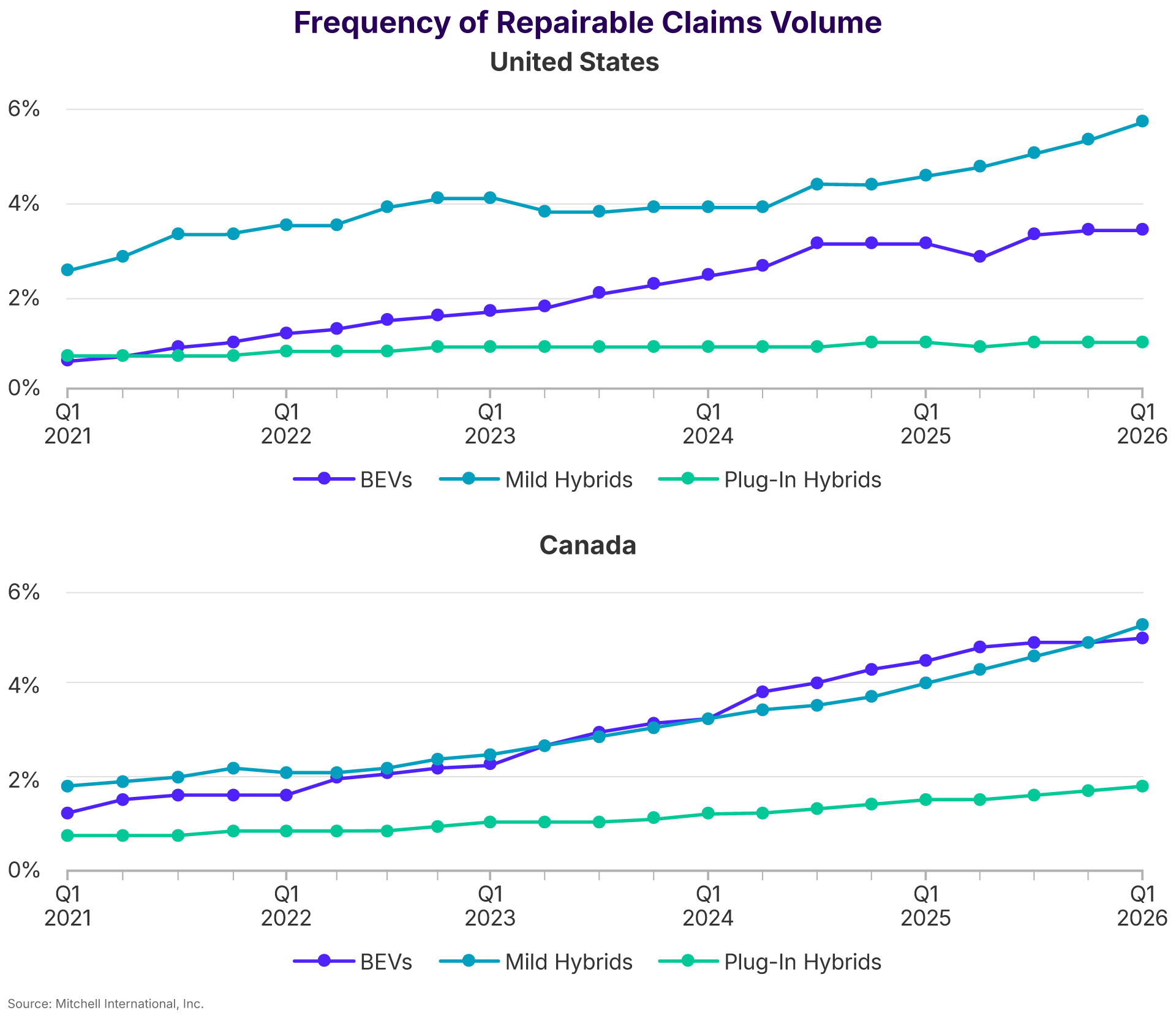
The U.S. share of repairable collision claims involving battery electric vehicles (BEVs) held steady at 3.33% in Q1 2026, unchanged from Q4 2025. Although sales of new BEVs grew modestly quarter over quarter, they remain 28% lower year over year. Several OEMs have scaled back production following increases in import tariffs and the expiration of federal tax incentives. Despite this near-term slowdown, BEVs are projected to reach approximately 29% of new vehicle sales and just over 10% of vehicles in operation by 2035, driving a steady increase in collision exposure.
Limited new vehicle supply and rising fuel costs are pushing consumers to the used BEV market. Geopolitical instability in the Middle East conflict has contributed to oil price volatility, reinforcing the value proposition of electrified automobiles. At the same time, material cost pressures are increasing repair and manufacturing expenses. With Iranian military strikes on smelters in several Gulf states, aluminum prices have spiked. A U.S. Military Academy research center study notes that, “Gulf producers account for 9% of global aluminum output, but the true metric of strategic risk is not total world production; it is the far smaller, physically deliverable, and politically accessible pool of metal available to buyers on the margin.”
In Canada, BEVs accounted for 4.94% of repairable claims in Q1, remaining stable quarter over quarter. New BEV sales declined sharply early in 2026 following federal subsidy cuts but began to recover in March with the reintroduction of government incentives. These incentives, which favor BEVs and plug-in hybrid electric vehicles (PHEVs) under $50,000 (CAD), are also designed to increase sales of domestically produced models by exempting them from the price cap.
With BYD’s anticipated entry into the Canadian market, global competition is intensifying. A new January trade agreement allows limited imports of Chinese-built electric vehicles at significantly reduced tariff rates. BYD, which uses lithium iron phosphate “Blade Battery” technology and a vertically integrated model to bring supply chain and production processes in-house, is preparing its dealership rollout. The company’s lower priced models are expected to accelerate BEV adoption in the region and increase pricing pressure on incumbent auto manufacturers.
Charging infrastructure continues to evolve, with automakers transitioning to Tesla’s North American Charging Standard (NACS). While this shift can improve network access and reduce range anxiety, it also introduces a multi-year transition period where mixed charge port hardware, reliance on adapters and partial site upgrades add complexity for vehicles, fleet operators and loss outcomes tied to charging availability. Combined with inconsistent charger uptime, these factors increase the likelihood of low voltage incidents such as stranded vehicles, secondary tows and exposure to secondary damage while vehicles await charging availability.
Although BEV claims remained stable, repairable claims for mild hybrid electric vehicles (MHEVs) reached an all-time high in Q1—jumping to 5.69% in the U.S. and 5.28% in Canada. This represents a year-over-year increase of 25% and 33%, respectively. For many consumers, MHEVs deliver a better balance of efficiency, affordability and usability. Some automakers also see hybrids as a lower-risk pathway to meeting emissions and fuel economy regulations while leveraging existing manufacturing platforms. The increase in MHEV claims puts added pressure on collision facilities to ensure they have the proper equipment and training to deliver safe repairs. At the same time, carriers must factor in the added repair complexity and costs in underwriting and claims management.
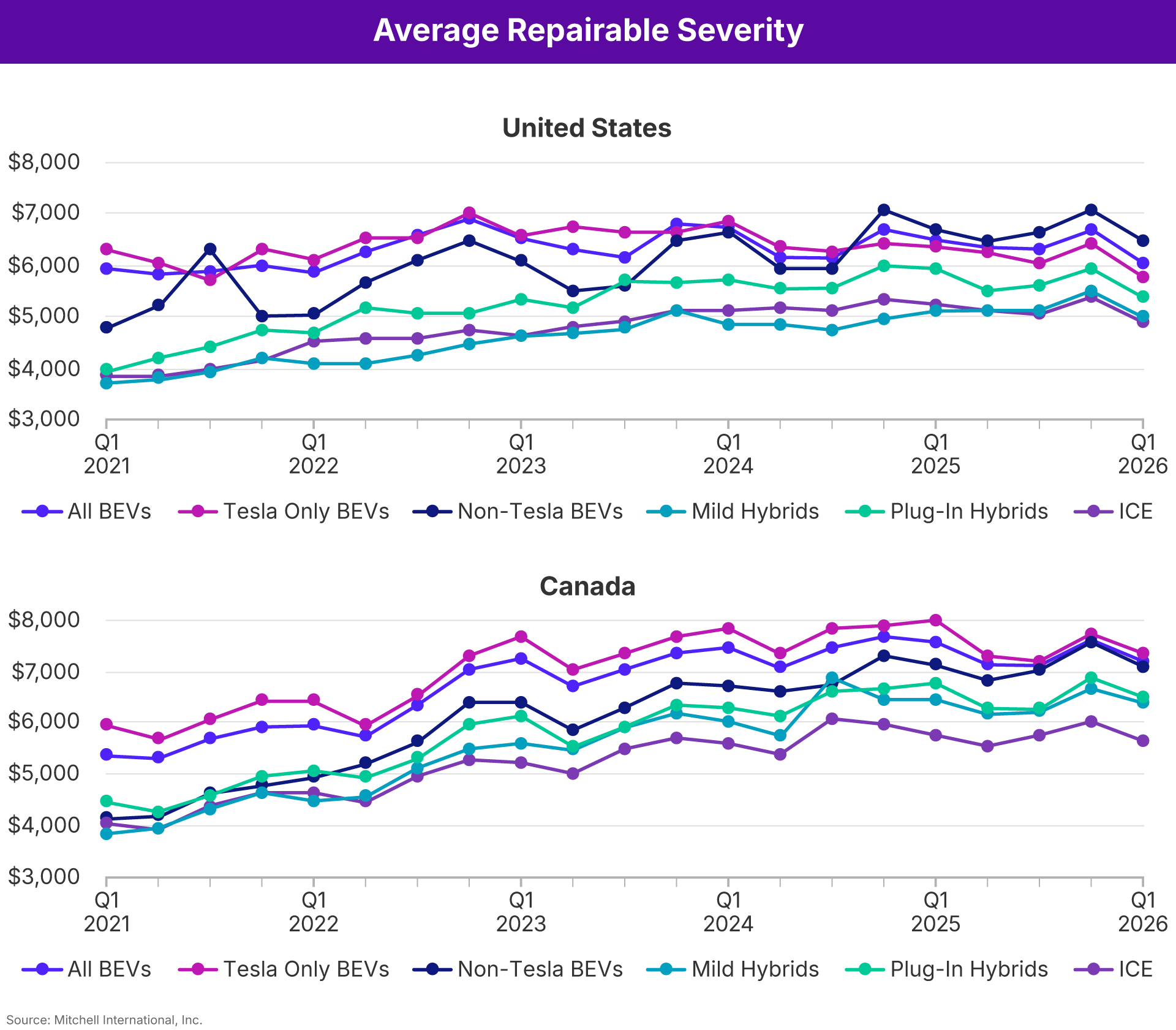
BEVs continue to generate the highest claims severity due to their advanced technology and complex, interconnected electronic systems. In Q1, average repairable severity in the U.S. was $6,042 for BEVs, compared to $5,352 for PHEVs, $4,993 for MHEVs and $4,902 for gasoline-powered automobiles. In Canada, severity followed a similar pattern, led by BEVs at $7,185 (CAD), $6,490 (CAD) for PHEVs, $6,370 (CAD) for MHEVs and $5,605 (CAD) for vehicles with an internal combustion engine (ICE). Quarter-over-quarter severity declined across all powertrains, with reductions of approximately 9% in the U.S. and 5% in Canada.
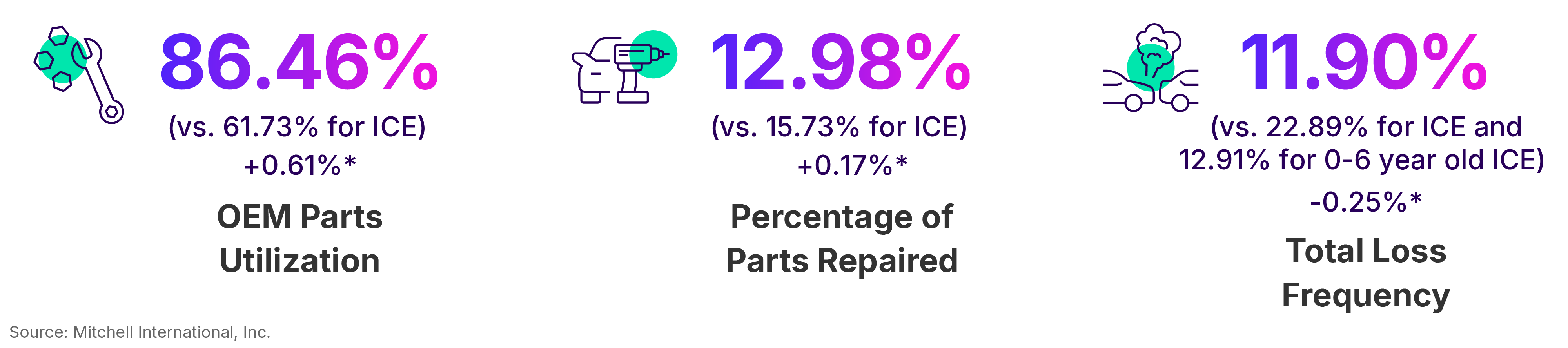
By the Numbers
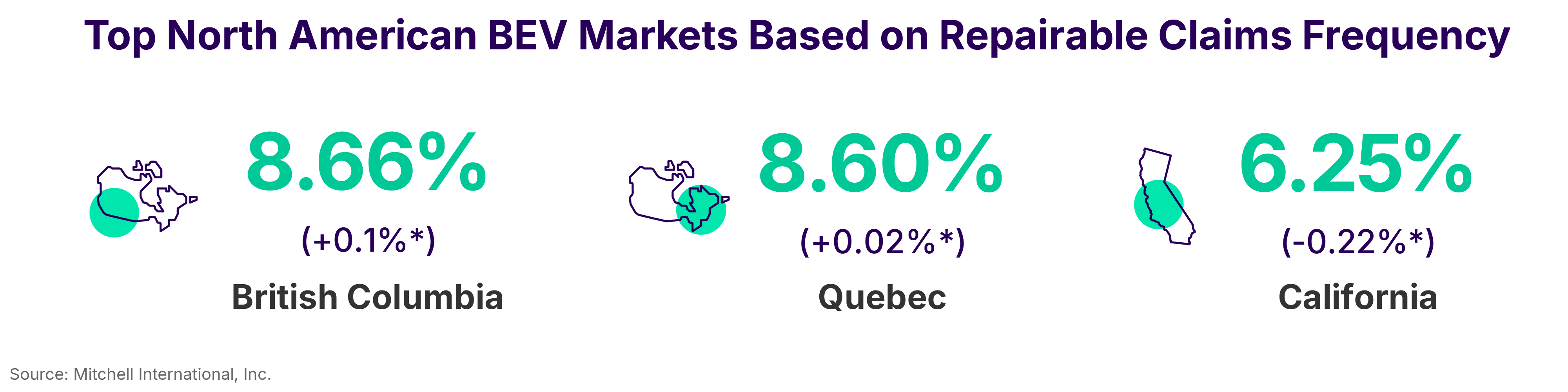
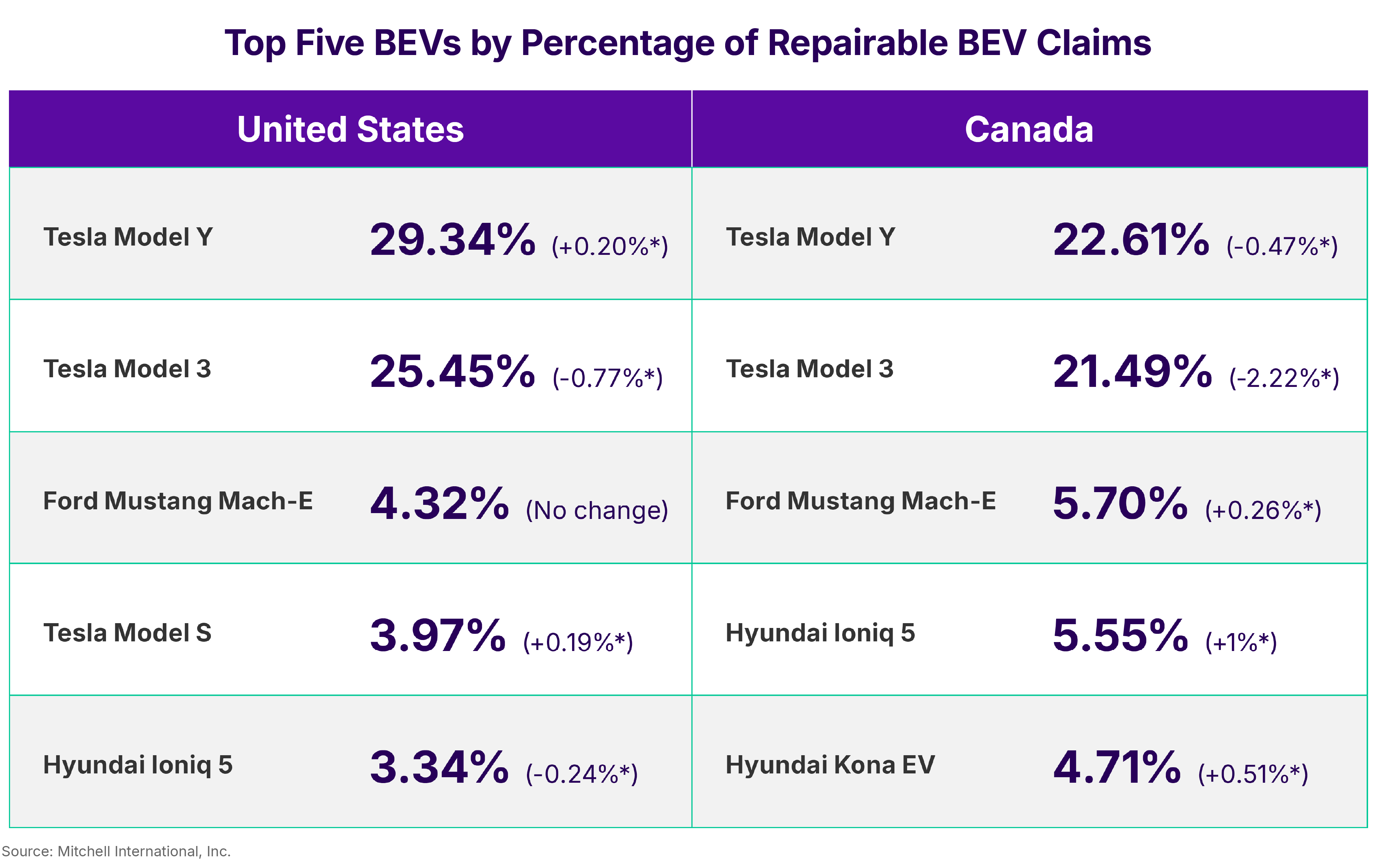
*Difference between Q1 2026 and Q4 2025.
Subscribe Now
To subscribe to future issues of Mitchell's Plugged-In: EV Collision Insights report, please complete the form below.